Visual communication aid: Invasive prenatal genetic testing
This communication aid has been produced to complement discussions about chorionic villus sampling (CVS) and amniocentesis during consultations with patients.
View and download communication aid(s)
There is one communication aid available to view and download (.pdf):
Double-sided printing in colour is recommended (but not required). All content is also included below in an accessible format.
More information about these and other VCAs is available in this article.
What is invasive prenatal genetic testing?
Prenatal genetic testing can be performed to find out if a pregnancy is affected by a genetic condition. Some prenatal tests are called ‘invasive’ because they involve taking a small sample from the pregnancy, using a fine needle. This resource explains two types of invasive prenatal test: chorionic villus sampling (CVS) and amniocentesis.
When can testing be offered?
CVS or amniocentesis may be offered if:
- an ultrasound scan has shown a possible difference in a fetus’ development; or
- a screening test in pregnancy (such as the combined screening test) has shown a higher chance of a genetic or chromosomal condition; or
- a previous pregnancy was affected by a genetic or chromosomal condition; or
- there is a known genetic condition in the family and the genetic cause (DNA change or variant) has been identified.
About CVS
CVS involves taking a small sample of the placenta, which contains the same DNA as the fetus. The sample is taken using a thin needle, guided by an ultrasound scan. The sample contains DNA, which can be tested.
CVS is usually performed between 11 and 14 weeks of pregnancy. The procedure carries a small risk of miscarriage, around 0.5% (1-in-200).
About amniocentesis
Amniocentesis involves taking a small sample of the amniotic fluid that surrounds the fetus. The fluid contains cells from the fetus, which contain DNA that can be tested. The procedure is carried out using a thin needle, guided by ultrasound.
Amniocentesis is usually performed after 15 weeks of pregnancy. The procedure carries a small risk of miscarriage, around 0.5% (1 in 200).
Sometimes, a blood sample is also taken from the mother. This helps the laboratory check that the DNA being tested does not include the mother’s DNA. This ensures the test results are as accurate as possible.
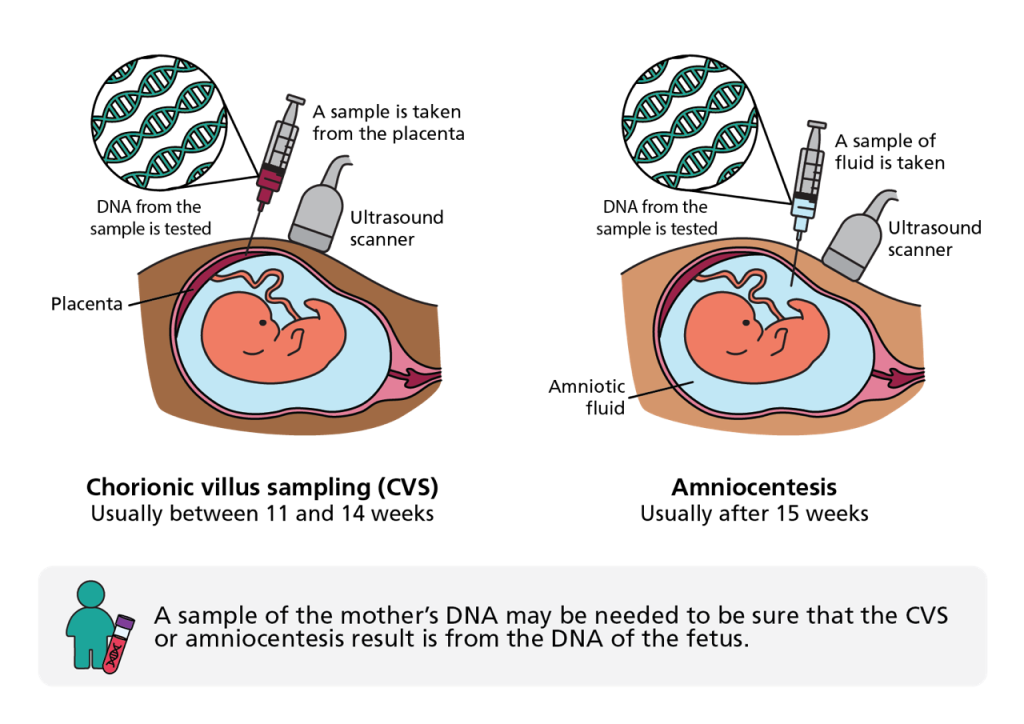
Figure 1: An overview of chorionic villus sampling (left) and amniocentesis (right)
(View larger size)
Key terms
- Placenta: The organ inside the womb that supports the fetus’ growth.
- Amniotic fluid: The fluid that surrounds and protects a fetus during pregnancy.
Resources
For patients
- Antenatal Results & Choices: Diagnostic tests
- NHS: Amniocentesis
- NHS: Chorionic villus sampling