Visual communication aid: De novo variants
This communication aid has been produced to complement discussions about de novo variants during consultations with patients.
View and download communication aid(s)
There is one communication aid available to view and download (.pdf):
Double-sided printing in colour is recommended (but not required). All content is also included below in an accessible format.
More information about these and other VCAs is available in this article.
What is a variant?
Variants are changes in DNA that make us unique. Most genomic changes are harmless, some cause genetic conditions. Genomic changes can either be inherited from parents, or they can occur ‘de novo’.
What is a de novo variant?
‘De novo’ is a Latin term that means ‘new’. In genomics, de novo means a genomic change that has happened for the first time in a person and was not inherited from either parent. The change occurred during the process of forming a parent’s egg or sperm, or just after conception (when the sperm fertilises the egg). As the fertilised egg begins to divide and grow, this genetic change is copied into more cells in the body.
A de novo change can affect all or some of the cells in the body. If only some cells in the body are affected, this is called mosaicism. Visual communication aids around mosaicism are also available here.
Can a de novo variant happen again in another child?
When a couple has a child with a de novo genomic change, the chance of having a second child with the same genomic change is usually low. It is important to speak with clinical genetics for personalised advice in this case.
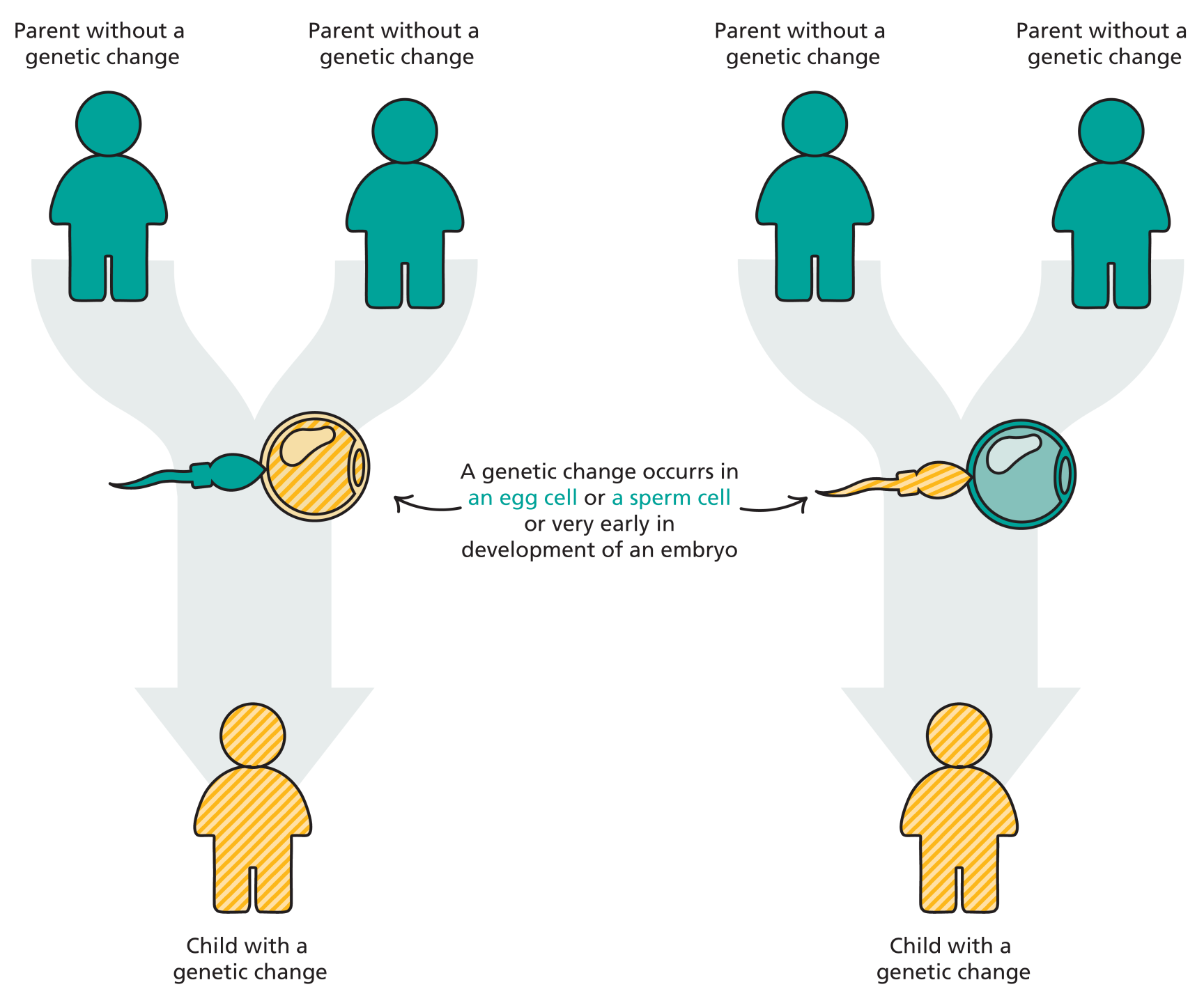
Figure 1: A de novo variant occurring in an egg cell (left) or sperm (cell) right, with the child being affected by a genetic change in both instances
(View larger size)
Key terms
- Genomic change: Changes in a gene or chromosome used to be referred to as ‘mutations.’ Now, they are more commonly called changes, alterations or variants.
Resources
For patients
- Unique: Disorder guides